HAPPY HOUR IS GETTING FUNCTIONAL
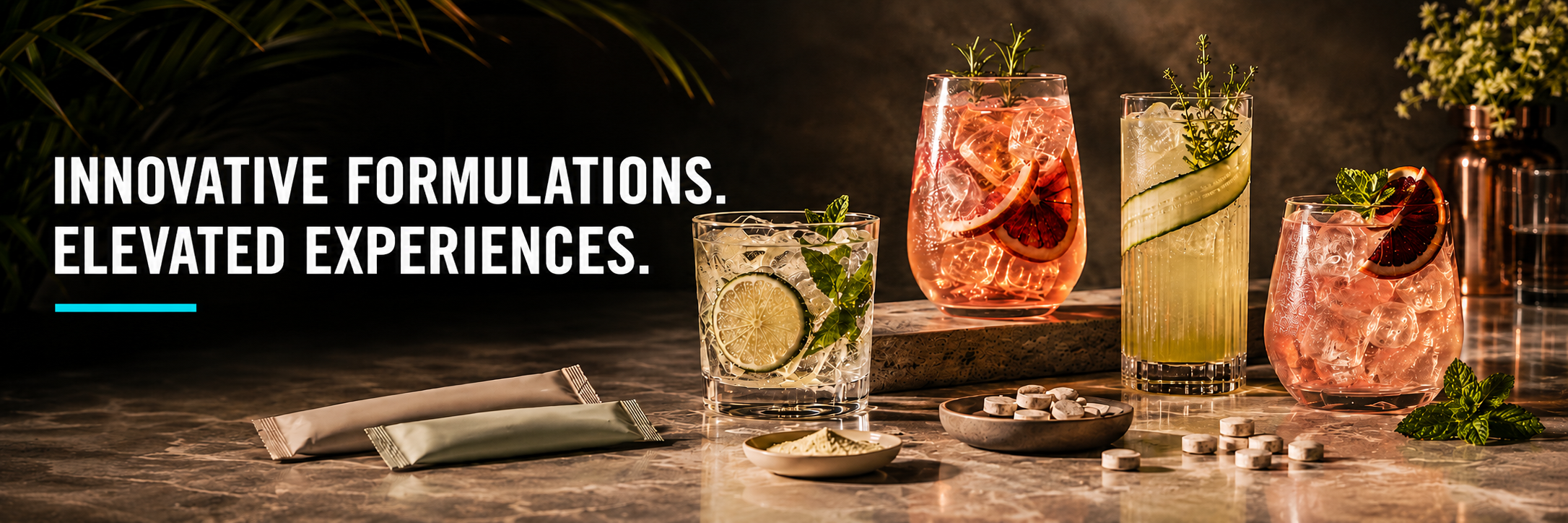
Happy hour looks a little different than it used to.
The ritual is still there. Work ends, dinner starts, friends come over, somebody pours something over ice and suddenly the day feels officially over. What’s changing is what consumers want in the glass.
Mocktails have gotten better and zero-proof menus have become more thoughtful. Functional beverages are moving well beyond traditional energy and hydration, showing up around mood, relaxation, focus, recovery, gut health and other specific needs. Consumers aren’t necessarily choosing between “fun” or “functional” anymore. They are increasingly expecting a product to give them both.
That creates an interesting opportunity for supplement brands, because happy hour is becoming less about one specific type of drink and more about the experience around it.
THE OCCASION MATTERS AS MUCH AS THE FORMULA
A drink has always been more than its ingredient list.
Coffee is built into mornings, pre-workout has an obvious place before training, and electrolytes fit naturally into sports, travel, heat and recovery. Consumers already understand those moments.
The evening has traditionally belonged to a much narrower set of products, but that has recently changed.
Someone might want something bright and citrusy while making dinner, something botanical and more complex while sitting outside, or something refreshing and functional to bring to a friend’s house. They may mix it with sparkling water, pour it over ice or make the whole thing look significantly fancier than it needs to because that is part of the fun.
None of that requires alcohol to make the occasion feel special, and for product developers, that opens up a much bigger question than, “what ingredients should go in this formula”, you also have to ask what the product is supposed to feel like.
Does it belong in a shaker bottle or a rocks glass? Should it be light and refreshing or more bitter and botanical? Is it designed for winding down, staying social, supporting hydration or simply giving the consumer something more interesting to reach for at the end of the day?
Those decisions shape the product before anyone gets to the flavor name.
FUNCTIONAL DOESN’T HAVE TO MEAN MEDICINAL
The supplement industry is very comfortable talking about dosage, delivery systems, ingredient science and clinical support. We should be. However, consumers are still consumers, and sometimes they would also like the product to taste good and be fun to use.
That should not be a controversial product-development philosophy.
A functional beverage can be tart, sophisticated, bright, botanical, slightly bitter, or completely unexpected. It can feel more like something you would order from a menu than something you dutifully mix into water because the label told you to.
In fact, if a product is being built for a social or evening occasion, the sensory experience matters even more. The consumer is not only comparing it with another supplement, they are comparing it with every other enjoyable thing they could have chosen instead.
“Pretty good for a supplement” is not going to carry a product very far in that environment. It has to literally be good.
THIS IS WHERE THE CONCEPT MEETS R&D
Of course, the fun part of product development usually happens before the raw materials arrive.
On paper, the concept is perfect. There is a great use case, a beautiful flavor direction, and a lineup of ingredients that looks fantastic in a presentation.
Then R&D starts working with it.
One ingredient is bitter, another is earthy, the mineral system is… different, and something refuses to dissolve the way everyone hoped it would. Suddenly that elegant little drink concept has become a much more complicated formulation project.
That is not a reason to make the formula boring. It is a reason to develop the flavor, function, and format together instead of treating flavor like the last box to check.
Things like sweetness, acidity, solubility, and mouthfeel change the experience. Even the way the product looks once it hits water can change whether the consumer feels like they made a great drink or mixed up a supplement. Those details matter when the product is supposed to become part of a ritual.
FLAVOR IS GETTING MORE INTERESTING
The rise of better mocktails and zero-proof drinks has also expanded what consumers expect from flavor. We think this is super exciting.
There is still plenty of room for familiar fruit profiles, but there is also growing interest in flavors that feel more layered, sophisticated, or occasion-driven. Botanicals, complex citrus, tart fruits and beverage-inspired combinations can make a product feel very different from the standard sports-nutrition flavor lineup. That gives brands more room to think about flavor as part of the positioning, not just a way to cover up the active ingredients.
A flavor can tell the consumer when the product belongs in their day before they ever read the full ingredient panel. It can make something feel energizing, refreshing, relaxing, social, or a little more grown-up.
Once consumers start associating certain flavors with a particular mood or occasion, there is no reason those experiences have to stay inside a beverage. That is where things get especially fun.
A familiar drink-inspired flavor showing up in an unexpected supplement format can completely change how the product feels to use. The underlying function may be familiar, but the experience around it feels new.
Product innovation does not always require inventing a completely new ingredient story. Sometimes it is about taking something consumers already understand and presenting it in a way they did not expect.
FORMAT, FLAVOR, AND FUNCTION SHOULD NOT BE SEPARATE
One of the easiest ways to make a product feel predictable is to develop it in a straight line. Choose the ingredients. Pick a format. Add a flavor. Move on. That may work technically, but it leaves a lot of opportunity on the table.
A formula that sounds ordinary in one format may become much more interesting in another. A strong flavor concept might suggest a completely different use occasion. A single-serve format can make a product feel portable and spontaneous, while another format may make it feel more intentional or routine-driven. Consumers experience all of those things at once. They do not separate the function from the flavor from the delivery system when they decide whether they like a product.
Product development should probably work the same way, yeah?
HAPPY HOUR DOESN’T NEED ONE DEFINITION ANYMORE
The interesting part of this shift is not that every supplement brand should launch a mocktail, rather, that consumers are creating more room in their routines for products that are enjoyable, intentional, and functional at the same time.
Sometimes that will be a drink, sometimes it will be a powder mixed with sparkling water, or sometimes the flavor experience may show up somewhere completely unexpected. That’s the product-development playground that goes beyond asking what the next trendy beverage should be.
The brands that make the most of it will be the ones that think through the whole product: what it does, how it tastes, when the consumer reaches for it, how it fits into the occasion, and whether they genuinely want to use it again.
Function can get someone interested.
A great product is what gets them back.
EXPERIENCE IT FOR YOURSELF
We’ve been playing with these ideas in R&D, and our team will be bringing several fun new concepts to SupplySide Global this October. If you’re attending, be sure to find us at Booth 7205 and try them for yourself!
If you’re a brand looking for a formulation + manufacturing partner that knows how to push product development further, give us a call. We’d love to see what we can build together.